

- astronomi
- gökyüzü gözlemi
- aile
- Published
- Reading time
- 2 min read
Stargazing with Children: 7 Steps to Get Started
You do not need an expensive telescope to start stargazing. With a clear night, a little patience and the right preparation, children can find their first constellations with the naked eye. Here are seven steps for an enjoyable and safe first night.
1. Check the weather and the Moon
Choose a cloudless night. Around the full Moon the sky is bright and faint stars disappear, so nights close to the new Moon are better for a first session.
2. Get away from light pollution
Even a balcony, garden or corner of a park away from street lights and bright screens makes a difference. If you can leave the city, your chances of seeing the Milky Way improve.
3. Let your eyes adapt to the dark
Eyes take 20–30 minutes to adapt fully to darkness. Try not to look at phone screens during that time; if you need light, use a torch with a red light.
4. Start with an easy target
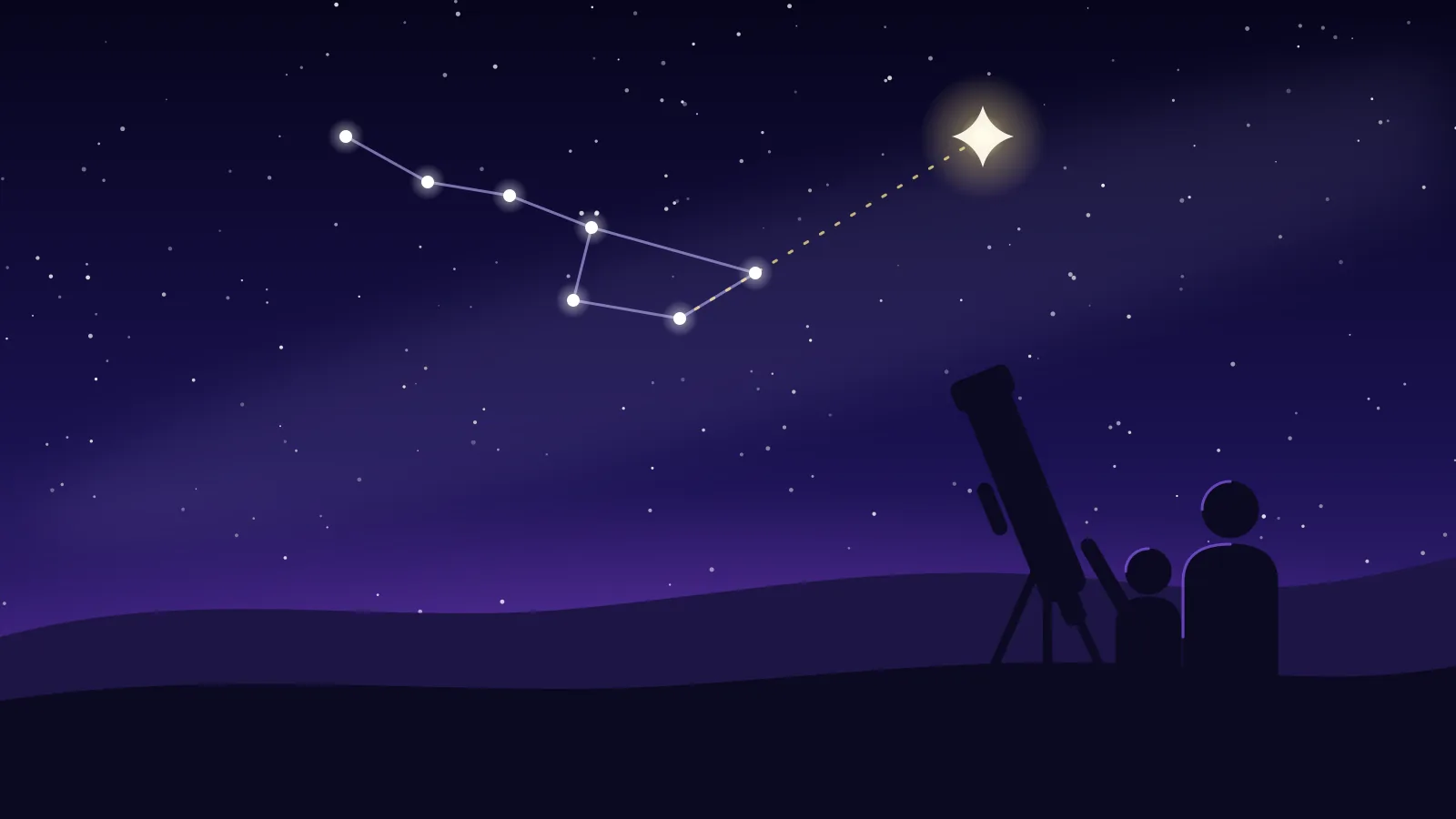
In the northern hemisphere, the seven bright stars of the Big Dipper in Ursa Major are easy to spot. Extend the line joining the two stars at the end of its bowl about five times and you reach Polaris, the North Star.
5. Tell stars from planets
Stars appear to twinkle because of the atmosphere, while planets usually shine more steadily. A very bright, steady point low in the evening or morning sky is most likely Venus or Jupiter.
6. Keep an observation journal
Write down the date, time, weather and what you saw, as short notes or drawings. Looking at the same part of the sky weeks later, you will notice for yourselves how it has changed.
7. Turn curiosity into questions
Note questions such as "Why do stars have different colours?" or "Why does the Moon rise at a different time every night?" and look for the answers together. The real gain of observing is learning to ask questions and to look for answers in evidence.
A note on safety
Never look at the Sun with the naked eye, binoculars or a telescope; it can cause permanent eye damage. Observe the Sun only with proper solar filters and under adult supervision.